Endourology
Scope-based, minimally invasive treatment for kidney and ureteric stones — no external incisions.
Problem & Diagnosis
Kidney and ureteric stones are among the most common conditions seen in urology, often presenting as sudden, severe flank pain that can radiate toward the groin, along with blood in the urine, nausea, or recurrent urinary infections. Some stones are found incidentally during imaging for an unrelated concern, while others announce themselves unmistakably. Diagnosis typically involves a combination of ultrasound and CT imaging to confirm the stone's size, exact location, and its impact on kidney drainage and function, along with basic blood and urine tests to check for infection or signs of kidney strain.
Procedure & Precision
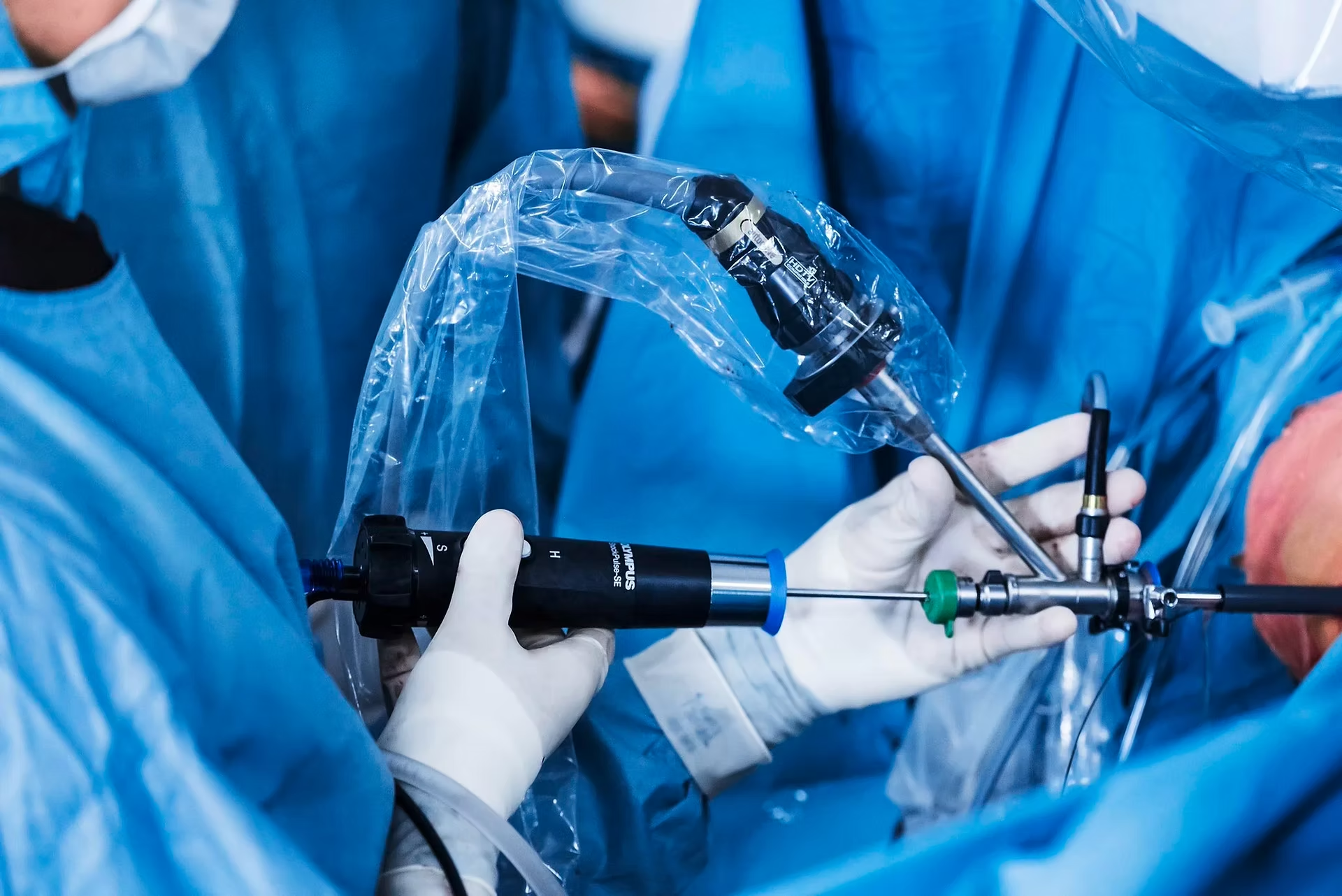
Endourological procedures — including RIRS (Retrograde Intrarenal Surgery), PCNL (Percutaneous Nephrolithotomy), and ureteroscopy — access the stone through the body's natural passages, or through a small keyhole tract in the case of PCNL, using fine scopes and laser fragmentation to break the stone down and clear it. Which technique is used depends on the stone's size, location, and composition. This approach avoids traditional open surgery entirely, meaningfully reducing pain, blood loss, and recovery time compared to older surgical methods for stone disease.
Life & Recovery
Most patients go home within a day or two of the procedure, and many endourological procedures are even done as day-care surgery. A temporary stent may be placed inside the ureter to support healing and keep urine flowing freely while the area recovers, and this is removed at a short follow-up visit, typically within one to two weeks. Most people return to normal daily activity within a week, and follow-up includes personalized guidance on hydration, diet, and any underlying metabolic factors that may have contributed to stone formation, to help reduce the chances of recurrence.
Dr. Peerzada explains endourology
What this approach is built to achieve
Complete Stone Clearance
Fully clear the stone burden in a single, well-planned procedure wherever possible.
Precise scope navigation combined with laser lithotripsy to fragment and clear stones without damaging surrounding tissue.
- Detailed pre-procedure imaging to map stone location and size
- Laser fragmentation calibrated to stone composition
- Systematic clearance of all visible fragments
- Confirmation of clearance before the procedure ends
Fewer repeat procedures and a lower chance of stone recurrence going untreated.
Kidney Function Preservation
Protect long-term kidney function throughout treatment.
Careful, low-pressure irrigation and scope handling to minimize trauma to kidney tissue.
- Continuous monitoring of irrigation pressure during the procedure
- Gentle access techniques, especially in patients with a single functioning kidney
- Careful management of infected or obstructed systems
- Post-procedure function checks
Stone treatment without compromising the kidney's underlying health.
Minimal Discomfort
A recovery that lets patients return to normal life quickly.
Incision-free or keyhole-only access, tailored anesthesia, and proactive pain management.
- Scope-based access through natural passages where possible
- Same-day or next-day discharge planning
- Clear guidance on stent care and pain management at home
- Structured follow-up for stent removal
A short, predictable recovery window instead of a prolonged hospital stay.
Endourology covers the full range of scope-based, minimally invasive treatments for stones and other conditions within the urinary tract. Using fine endoscopes and laser technology, these procedures reach the kidney and ureter through the body's natural passages or a small keyhole access point — avoiding the need for large incisions altogether, and often letting patients return to daily life far sooner than older surgical approaches would allow.
Stone disease can range from a small, incidentally-found stone that simply needs monitoring, to a large, complex stone burden requiring a carefully staged treatment plan. Every case is assessed individually — imaging is reviewed in detail, and the technique recommended (RIRS, PCNL, or ureteroscopy) is matched to the stone's specific characteristics rather than a one-size-fits-all approach.
Dr. Peerzada Faisal Masood's training in minimally invasive urology means these procedures are approached with an emphasis on complete stone clearance in as few procedures as possible, careful preservation of kidney function throughout, and a recovery designed to get patients back to their lives quickly — with practical, individualized guidance afterward to help prevent stones from coming back.
Common questions about endourology
Because these procedures avoid large incisions, discomfort is typically mild and well managed with standard pain relief. Most patients describe the recovery as far easier than they expected.